About
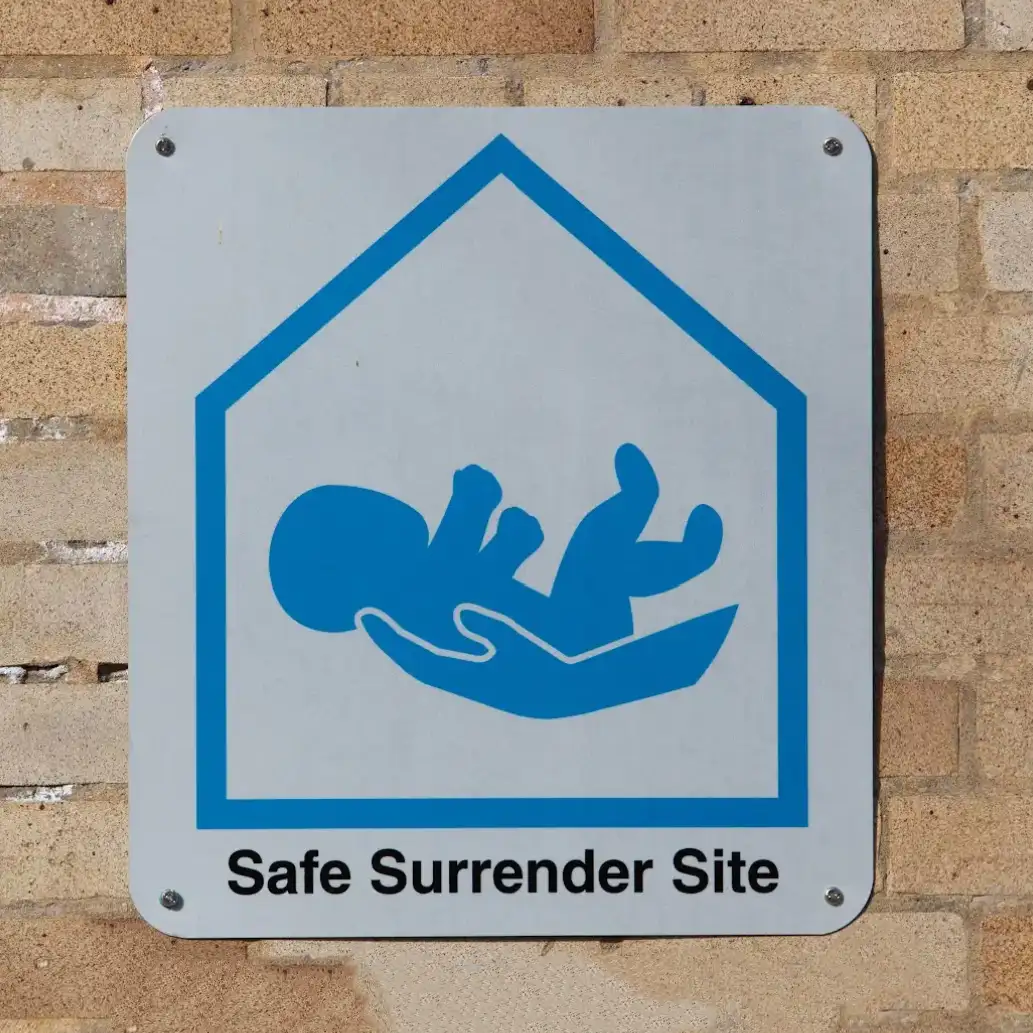
The Safely Surrendered Baby Law was created to give parents in crisis a safe and legal option to surrender their newborn up to three days (72 hours) old. A parent or person with lawful custody can safely surrender a baby confidentially, and without fear of prosecution for child abandonment, within 72 hours of birth at any designated Safe Surrender site in California – such as hospitals, fire stations, or other locations displaying the Safe Surrender logo.
This process is free, confidential, and protected by law. Surrendered babies receive immediate medical attention and are placed with approved families through California’s child welfare system. The 72-hour window begins from the moment of birth, and surrender must occur at a staffed facility designated as a safe surrender site where trained personnel can safely receive the infant. Parents may provide voluntary medical history information that may benefit the child’s future care.
If a surrendered infant is or may be an Indian child, federal and state Indian Child Welfare Act (ICWA) protections apply, which may affect placement decisions to preserve cultural connections and the rights of the child and their Tribe.
How It Works
- Bring the baby to a Safe Surrender site within 72 hours of birth.
- Hand the baby to any staff member.
- You will be offered a coded bracelet which matches the infant’s coded anklet.
- You have 14 days to change your mind and reclaim custody using the coded bracelet.
After 14 days, your parental rights may be permanently terminated, and the infant may be placed for adoption. However, in the case of an Indian child, under the Indian Child Welfare Act (ICWA), additional protections may apply, and tribal notification requirements must be met.
Frequently Asked Questions
What is the Safely Surrendered Baby law?
The Safely Surrendered Baby law allows a parent or other individual having lawful custody to surrender an infant 72 hours or younger confidentially without prosecution for child abandonment. The parent or other individual having lawful custody may reclaim the infant within 14 days of surrender. In the case of an Indian child/infant, under the Indian Child Welfare Act (ICWA), additional protections may apply.
How does safe surrender work?
When a parent(s) or other individual having lawful custody surrenders the infant at a designated site, they receive a coded bracelet matching one given to the infant for potential reclaim purposes. The parent or surrendering individual will be asked to complete an optional confidential medical history form, including information about Native American heritage, which is placed in the infant’s file.
Is my agency a Safe Surrender Site?
Hospitals (public and private) with a designated location to accept a surrendered baby are safe surrender sites. Many fire stations with appropriate approvals are also sites. Other organizations can become sites with proper county approval.
How can I find a Safe Surrender Site near me?
Visit https://www.211la.org/safely-surrender-baby and enter your zip code to locate nearby sites.
How can my agency become a Safe Surrender Site?
Agencies must receive approval from the county board of supervisors and local fire agencies (for fire stations).
Where can I find the most recent data about Safely Surrendered Baby?
Visit OCAP (Office of Child Abuse Prevention) for the most recent Safely Surrendered Baby statistics.
How can a surrendering parent or legal guardian reclaim an infant?
Parents or legal guardians have 14 days from surrender to reclaim by contacting their county child welfare services agency. After 14 days, a different legal process applies. For infants who are Indian children, additional tribal notification and other requirements may apply.
How can I adopt a Safely Surrendered Baby?
Newborns are placed with approved foster families or adoption agencies. Contact the California Department of Social Services Adoption Services or call 1-800-KIDS-4-US for information and agency referrals.
What guidance has California released for Safe Surrender sites?
The Department of Social Services has issued multiple All County Information Notices (ACINs) covering law updates, best practices, site approval, translations, and reporting requirements.
How can I get more information?
Call the statewide hotline at 1.877.BABY.SAF (1-877-222-9723) or email ssb@dss.ca.gov.
Safely Surrendered Baby and ICWA
Enacted in 1978, the Indian Child Welfare Act (ICWA) was created to prevent the separation of Native children from their families, culture, and tribes. It ensures that a child’s tribe is involved in decisions about their care and placement.
There are two types of ICWA placements: voluntary and involuntary. A voluntary placement involves parental consent before a judge, which can be withdrawn. A safely surrendered baby is not a voluntary placement under ICWA. When a baby is safely surrendered, a petition is filed and the court places the child in the care and custody of the county child welfare agency. This makes the case an involuntary child custody proceeding, and the ICWA requirements for involuntary proceedings apply.
Under ICWA, Child Welfare Services works with the identified tribe to protect the child’s rights. Tribal membership offers important benefits, including access to services, culturally appropriate placements, and legal protections.
Why does the Safely Surrendered Baby medical questionnaire ask about tribal affiliation?
The Medical Questionnaire included in Safely Surrendered Baby (SSB) kits asks about the newborn’s tribal affiliation. Tribal identification is not just to access benefits; it’s required for ICWA compliance in an involuntary proceeding. If the baby is identified as an Indian child, Child Welfare Services will work with the tribe to determine the best placement.
Are ICWA requirements the same for voluntary and involuntary proceedings?
No; ICWA has different rules for voluntary versus involuntary placements. During an involuntary proceeding, involuntary ICWA rules apply which affect tribal notification, placement preferences, and active efforts.
What rights does a surrendered infant with tribal eligibility have under ICWA?
Infants who are Indian children, as defined by law, may have enhanced protections including:
- Access to federal and tribal benefits and services
- Placement preference with a member of the Indian child’s extended family, a foster home licensed, approved, or specified by the Indian child’s Tribe, or an Indian foster home, licensed or approved by an authorized non-Indian licensing authority
- Culturally appropriate placements following tribal social and cultural standards
- Support from ICWA-trained personnel and legal counsel
- Tribal representation at court hearings
Why is tribal heritage information important?
Providing tribal heritage and membership information helps ensure the child receives protection and benefits under the ICWA. This includes providing tribal membership numbers, Tribe names/locations, and reservation/rancheria information. This information helps determine eligibility and ensures proper tribal notification.
What additional requirements apply to ICWA cases?
County caseworkers must:
- Provide “active efforts” (higher standard than reasonable efforts) to maintain or reunify families
- Follow ICWA placement preferences prioritizing the Indian child’s extended family and tribal members
- Provide notice to Tribes at least 10 days prior to hearings, or as soon as possible after filing the petition, and allow tribal participation in all proceedings
- Work actively and collaboratively with Tribes on case management and court proceedings
- Meet higher burden of proof standards for termination of parental rights